Caspio Blog
Dive into the world of low-code development with the latest industry trends, inspirations and insights.

Secure Alternatives to Vibe Coding for Business Apps (2026)
The secure alternative to vibe coding is governed AI app development: building on a platform where AI-generated output inherits certified security controls, roles, record-level security, and audit logs, instead of shipping as a code artifact nobody owns. In...

AI + No-Code: How Generative AI Is Transforming Application Development
Generative AI is changing how applications get built by shortening the path from idea to working draft. Instead of starting from a blank page, non-developers can now describe what they need and quickly produce something tangible to review, test, and refine....

Why Unlimited Users Is the Most Underrated Line on Any Pricing Page
Unlimited users is the most underrated line on any pricing page because per-user pricing compounds exactly when your software succeeds. At $20 per user, 50 users cost $1,000 a month and 5,000 cost $100,000. A flat rate costs the same at both. And the line d...
The Hidden Costs of “Free” AI App Builders (2026)
Free AI app builders price the prototype, not the product. The real bill arrives as four hidden costs, in escalating order: the consumption meter that charges you for success, the seat wall that prices every new user, the maintenance artifact someone must o...
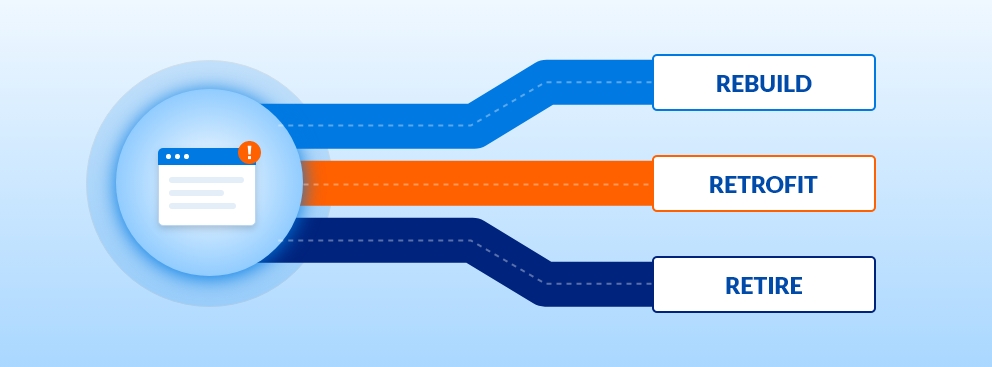
Rebuild or Retrofit? What to Do When Your Prototype Fails a Security Review
Your prototype failed a security review. You have three realistic options: retrofit the existing code with the missing security and compliance layer, rebuild it on a governed platform using the prototype as your spec, or retire and fence it as an internal, ...

Self-Attested, NDA-Only, or Independently Certified: How to Read a Vendor’s Compliance Claims
Every compliance claim on a vendor's security page belongs to one of three evidence classes: self-attested (the vendor says so, and no one can check), NDA-only evidence (proof may exist, but nothing verifiable is stated publicly), or publicly verifiable ind...
What a BAA Actually Covers (and What It Doesn’t): A Plain-English Guide for App Teams
A business associate agreement (BAA) is the written contract HIPAA requires before a vendor can handle protected health information (PHI) on your behalf. It covers permitted uses of PHI, safeguards, breach reporting, subcontractor obligations, and terminati...

How to Build an Online Database Application Without Coding
To build an online database application without coding, define your data and users, model your tables and relationships, build the database, create the forms, search interfaces and reports your users need, secure the application with roles and authenticatio...

HIPAA Compliance for No-Code Applications: A Complete Guide
No-code applications can be fully HIPAA-compliant, but only when the underlying platform signs a Business Associate Agreement (BAA), isolates protected health information (PHI) on dedicated infrastructure, and validates its controls through independent annu...

Complete Guide: Migrating from Microsoft Access to Caspio
To migrate from Microsoft Access to Caspio, export your Access tables to CSV or Excel, import them through Caspio’s import wizard, review and adjust the data types and keys, then rebuild your relationships, forms, and reports as fully hosted cloud applicati...
Recommended Articles
How AI Agents Buy Software, and Why Legibility Wins
READ STORY
10 Questions to Ask Before Connecting AI to Business Data
READ STORY
Add a Role-Aware AI Chat Agent to Your Caspio App
READ STORY
Build Internal Tools With AI: Best Tools for Business (2026)
READ STORY
Vibe Coding vs. Low-Code: Key Differences and Where Caspio Fits in 2026
READ STORY
Lovable Alternatives for Business and Regulated Apps (2026)
READ STORY
Vibe Coding Governance: The IT Leader’s 2026 Checklist
READ STORY
Shadow AI Apps Are the New Shadow IT: A 2026 Guide
READ STORY
Code Artifact vs. Governed Platform: The Two Architectures
READ STORY
AI App Builders for Regulated Industries: 2026 Buyer's Guide
READ STORY
Secure Alternatives to Vibe Coding for Business Apps (2026)
READ STORY
AI and No-Code: Generative AI in App Development
READ STORY
