How AI Agents Are Changing How Software Gets Found and Bought

Frank Zamani
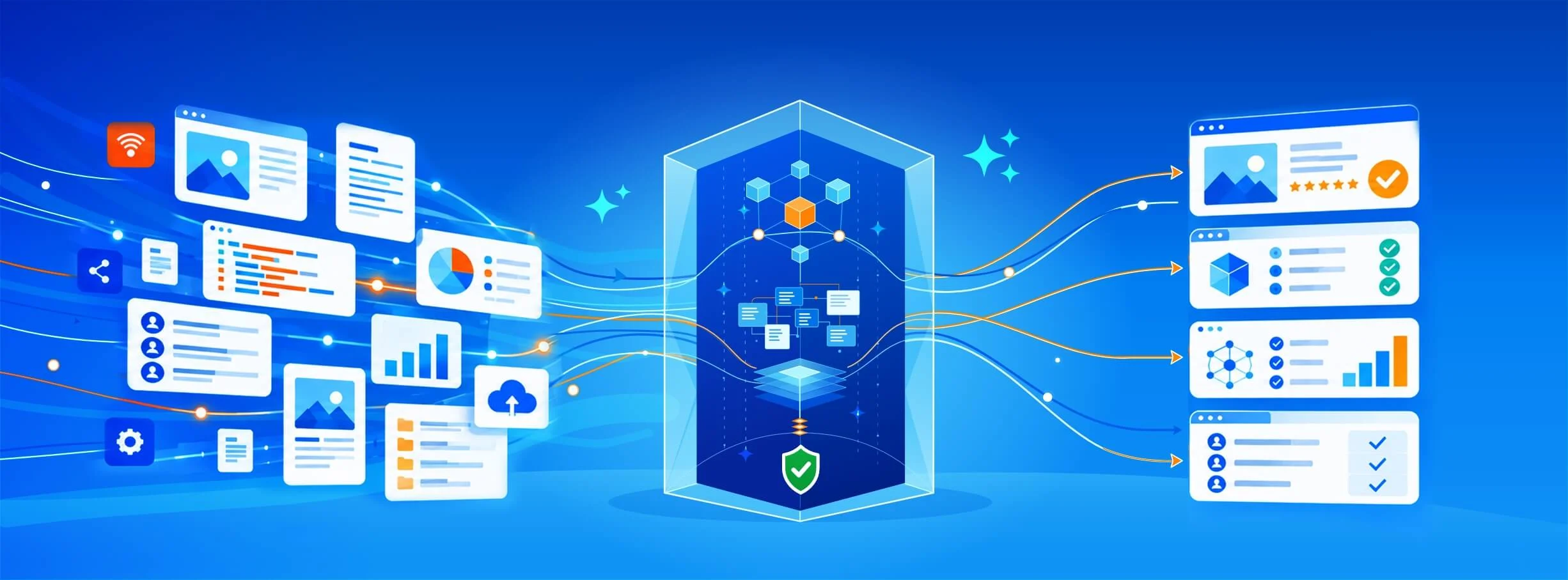
Somewhere right now, a buyer is asking an AI assistant to shortlist software in your category. The assistant reads everything, most of it written by people who are not you, then decides whether you exist.
Software discovery is moving from search pages to AI intermediaries, and soon to agents that act for the buyer. The vendors who win are the ones those systems can read, verify, and transact with. I call that property agent legibility, and I run a software company, so this is not a spectator sport for me.
The Rails Got Rebuilt in 14 Months
Start with what is checkable. In September 2025, OpenAI and Stripe launched Instant Checkout, letting US ChatGPT users buy directly in chat, with the Agentic Commerce Protocol as an open standard underneath. Kevin Miller, who leads payments at Stripe, put it plainly: “Stripe has spent the last 15 years optimizing commerce for human buyers. Now, we’re starting to do the same for agents.”
Six months later, OpenAI reshaped it. “Instant Checkout is moving to Apps, where purchases can happen more seamlessly,” a spokesperson said in March 2026, adding that the company is prioritizing search and product discovery, with the protocol serving as infrastructure. Target, DoorDash, Instacart, and The Knot shipped dedicated ChatGPT apps.
Read both halves. The checkout button got re-architected in public within six months. The durable layer, discovery plus the protocol, did not move. That is the tell for where the value sits.
The payment networks saw the same thing. Mastercard unveiled Agent Pay in April 2025 and completed US cardholder rollout by November. Visa announced Intelligent Commerce in April 2025 and a Trusted Agent Protocol that September. Google announced its Agent Payments Protocol in September 2025 with more than 60 partners. Perplexity and PayPal turned on agentic checkout for US shoppers before Black Friday 2025. Every major payment network and the two biggest AI assistants shipped an agent-payments primitive between April 2025 and June 2026. Fourteen months. No adjectives required.
Is the traffic there yet? Be honest about the base. Similarweb puts average AI referral share at around 0.13% of total website visits in 2026. That is small. But Adobe, working from more than a trillion US retail site visits, reports AI-referred traffic grew 138% year over year in May 2026 and over 1,300% since it began tracking in late 2024. By spring 2026, Adobe was reporting AI-referred visitors converting roughly 40 to 50 percent better than other traffic, a full reversal from a year earlier, when they converted worse. These are directional figures from retail, not B2B gospel. But early and small, with that slope, is exactly what search traffic looked like once. The slope is the story.
Your Website Is a Minority Source on Your Own Product
Here is the part most software marketers have not internalized. One 2026 study of ChatGPT software recommendations found that 81.9% of ChatGPT citations for software-recommendation answers go to third-party content; the vendor’s own site is cited only 11.6% of the time. One study, one engine, so do not overextend it. But sit with the direction: when an AI system explains your category to a buyer, your website is a minority source on your own product.
A related finding points the same way. Across 75,000 brands, YouTube mentions are the strongest single AI Overview visibility correlate. Correlation, not causation. Still, the pattern is consistent: these systems trust what others say about you more than what you say about yourself.
You cannot charm this reader. It does not respond to hero images or urgency banners. It reads everything, follows every link, and cross-checks. Marketing to it is not persuasion. It is evidence management.
The Three Properties of Agent Legibility
If an agent is going to recommend you, it needs three things it can verify without asking permission.
- First, crawlable, deterministic documentation. If an agent cannot read your docs or complete your quickstart, it recommends someone whose docs it can. A failed agent session is a failed demo, except you never learn it happened. Leading platform companies already build for this. Stripe lets you append .md to any docs URL to get plain Markdown, and publishes an llms.txt file that opens with instructions telling agents which APIs to prefer. Anthropic maintains a live llms.txt index of its entire developer documentation. Adoption is still early, roughly one in ten domains in one 300,000-domain crawl, and the major crawlers do not yet request these files in volume, so nobody should sell you llms.txt as a ranking factor. The point is different: companies whose developer motion is their business are already shipping docs whose intended first reader is a machine. The cost of being illegible is rising.
- Second, published pricing. An agent cannot “contact sales.” It cannot sit through your discovery call or be nurtured by your sequence. In an agent-mediated comparison, an unpublished price is an invisible price, and invisible usually means excluded. We publish ours at Caspio: plans starting from $300/month, no free plan, a 14-day trial. An agent can read that in one pass and represent it accurately to a buyer. That is the entire mechanism, and it needs no case study.
- Third, claims that survive verification. Agents cross-check. The claims that hold up are the ones with dates, named sources, and third-party corroboration. “Enterprise-grade security” is an adjective. An independent certification renewed annually, verifiable by name and date, is evidence. At Caspio, our HIPAA and SOC 2 Type II compliance is independently certified every year, and we say it exactly that way because every word of it is checkable. The evidence class matters more than the claim; That distinction is covered in more detail in How to Read a Vendor’s Compliance Claims.
What We Actually Did
I will not pretend we saw all of this early. We ran the standard playbook for years: gate things, optimize pages for skimming humans, and treat documentation as a support cost. Here is what we changed, and all of it is publicly observable, which is the point.
We opened our documentation to AI crawlers, including robots.txt, and published a curated llms.txt so an agent gets an accurate map of the platform instead of a guessed one. Our pricing has been public for years, and we kept it that way when it would have been easy to hide the numbers behind a form. Our compliance claims carry dates and identify the independent auditors. And we maintain the public Caspio MCP Server, so an agent can work with Caspio applications under scoped permissions rather than scraping its way around them. We now put an AI Agent inside the apps themselves, operating under each signed-in user’s own role, with field-level security set at design time. Agent access to data should be governed exactly like human access. Same standard, pointed inward.
None of these are exotic. Most of it is subtraction: removing the gates, the vagueness, and the “contact us” reflexes that made sense when every visitor was a human you might charm. It is uncomfortable. Published pricing gets you shopped. Open docs get you copied. Checkable claims get you checked. Do it anyway.
Agents Are a Gift to Honest Vendors
Here is the thesis I would put on the wall. An agent-mediated market is a more honest market. Agents do not reward the best-funded ad budget or the smoothest demo narrative. They reward the vendor whose documentation works, whose price is knowable, and whose claims survive being looked up. That is good for buyers, obviously. It is also good for every vendor whose product is better than its marketing, which, in my experience, describes most of the good ones.
For 25 years, software marketing has been optimized for a reader who skims. The new reader reads everything. Build for that reader, and the humans will find you too.

Recommended Articles

Online Database With a SQL Backend: 7 Questions to Ask
READ STORY
Best Bolt.new Alternatives for Business Apps (2026)
READ STORY
9 Vibe Coding Security Risks in AI-Generated Apps
READ STORY
Build Custom Business Apps Easily: 3 Patterns
READ STORY
Caspio AI Connector Extensions: 5 Jobs for Your Tables
READ STORY
PHI and Caspio AI: Which Features Your BAA Covers
READ STORY
10 Questions to Ask Before Connecting AI to Business Data
READ STORY
Add a Role-Aware AI Chat Agent to Your Caspio App
READ STORY
Build Internal Tools With AI: Best Tools for Business (2026)
READ STORY
Vibe Coding vs. Low-Code: Key Differences and Where Caspio Fits in 2026
READ STORY
Lovable Alternatives for Business and Regulated Apps (2026)
READ STORY
Vibe Coding Governance: The IT Leader’s 2026 Checklist
READ STORY
