Improving Police Performance With Body Camera Data: 360AOR’s Low-Code Journey
May 29, 2023

At a Glance:
- Organization: 360AOR — a law enforcement consulting firm based in the U.S.
- Industry: Public Safety/Law Enforcement Consulting
- Challenge: Tracking body-worn camera (BWC) footage with spreadsheets and MS Access was inefficient, error-prone and hard to scale.
- Solution: ATLAS (Assessment Training Liability & Accountability System), a Caspio-powered app that automates random sampling, KPI tracking, officer performance reviews and prescriptive training recommendations, built to turn BWC footage into actionable insights.
- Results:
- Adopted in four U.S. states and recognized by DOJ, CNN and other national outlets.
- Automated officer evaluations, reducing reliance on manual video review.
- Clear KPIs and performance dashboards, improving training outcomes and accountability.
- Scalable nationwide potential with ongoing pilots to expand adoption.
Body-worn cameras (BWCs) have become a key component of the American justice system, revolutionizing how crucial evidence is gathered for cases and complaints. But more than just capturing video footage, they provide valuable insights into the day-to-day performance of police officers.
Former Linden, New Jersey Chief of Police Jonathan Parham recognized the value of BWC footage data. After retiring from the force, he founded 360AOR, a law enforcement consulting firm dedicated to harnessing this information to improve the quality of public service.
Here’s how 360AOR used Caspio’s low-code platform to develop powerful custom software that not only automates the entire BWC review evaluation process but also empowers law enforcement agencies to make data-driven decisions and proactively intervene.
A Lack of Visibility on Police Performance
Since the Obama administration funded BWC programs in 32 states in 2015, their use has increased nationwide. In some states, police body camera adoption has even become mandatory.
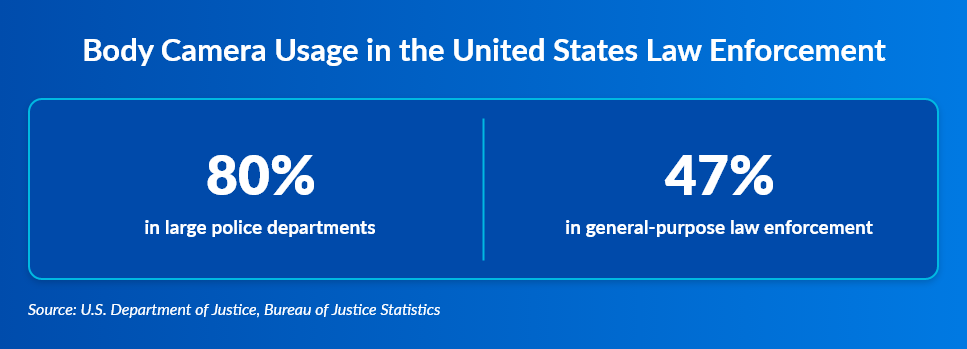
MORE EYES ON THE GROUND: BWCs are widely used across law enforcement agencies in the US.
However, typically BWC videos are not viewed regularly unless there is an incident or complaint filed.
“There are hundreds of thousands of hours of BWC videos that’s never looked at,” said Parham, who has over 15 years of experience in law enforcement training and consulting.
In a video interview for Scripps News, Parham acknowledged that viewing BWC footage is a tall order. “Agencies often assume the only way utilize the footage is to view it manually, when in reality you can use random sampling to effectively gather information.”
Using random sampling, agencies can uncover the officers’ overall habits, not just stand-out moments. “It’s about performance improvement,” said Parham. “We are creatures of habit. How we do one thing is most likely the way we do all things. The idea is to identify those trends and address them.”
Starting From Within the Force
Earlier in his career, when Parham served as a policy director at the New Jersey Union County Prosecutors Office, he helped pilot a program that evaluated the BWC data of local officers. From these videos, he and his team drew guidelines for improvements and best practices, and established key performance indicators.
Parham shared, “All agencies have a policy. But if you don’t have a policy you follow, then you don’t have a standard.”
He first began developing KPIs and monitoring officer performance manually using Excel spreadsheets. His team used the data as training material and quickly saw an improvement in officer performance. “When the metrics are clear, officers do what they’re expected to do,” he explained further.
As the scope of the project expanded, Parham switched from Excel spreadsheets to a Microsoft Access database on his computer. But he soon outgrew Access as well.
“I was stuck. I had to figure out what to do because I couldn’t maintain this database with just Microsoft Access. It’s not useable or shareable with multiple agencies,” Parham said
A quick Google search led him to Caspio.
From a Local MS Access File to a Powerful Online Database
Parham found what he was looking for in Caspio: the ability to migrate his data from MS Access to a scalable, multi-user online database that could streamline the evaluation of thousands of hours of BWC footage – plus all the assistance and expertise he needed to get it all done.
He contacted Caspio Professional Services and worked with the team to build what is now known as the Assessment Training Liability & Accountability System (ATLAS) – custom software that tracks and manages BWC footage to help agencies mitigate officer actions.
With Caspio, the process of creating the app was fast, smart and efficient.
Parham shared his experience in an episode of “Low Code/High Impact,” Caspio’s interview series available on YouTube and podcast platforms. He recalled, “I had already worked up the model; it just isn’t robust enough. With Caspio, I could easily migrate all of my data to the cloud and turn this Access database into a web application.”
Watch the full interview here:

A 360-Degree Approach to Mitigating Risks
ATLAS enables supervisors and experts to evaluate officer actions against KPIs and best practices. It also collects officer demographics to pinpoint whether performance issues are individual problems or broader agency issues.
“What we’ve been able to discover using this application is that, officer performance, while it seems problematic, is not the problem. It is the result of the problem,” said Parham. He adds that a lack of training and support is typically the cause of erroneous police behavior.
As such, Parham designed the application to be both descriptive and prescriptive, cataloging the actions of the officers and recommending alternative actions when needed. Both can be tracked at regular intervals for root cause analysis.
“Agencies love it,” Parham shared. “It’s been a tremendous hit.”
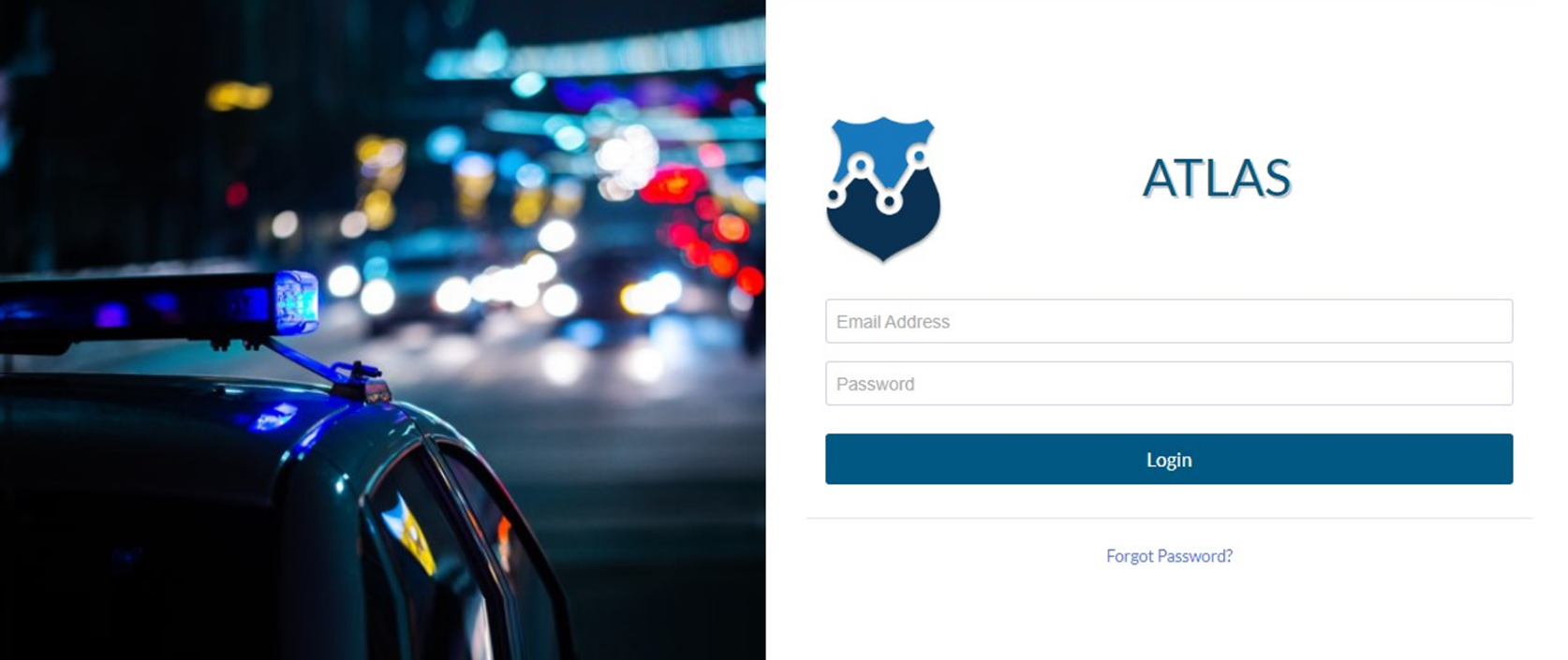


PIECES OF THE PUZZLE: ATLAS fosters random sampling to evaluate police behaviors in comparison to agency KPIs and best practice policies.
Parham summarized the three key areas for improving police performance: “So, clarity, communication and knowing the specific nature of how we want officers to perform – this is how we get the best out of our police,” he explained.
Today, ATLAS is used by various agencies across four US states and has been showcased in articles and news coverage for the U.S. Department of Justice, NIP Group and CNN. In the CNN story, US intelligence expert John Miller recognized ATLAS for shaping up our police. “Tools such as ATLAS are finding their way to improve police departments, using the technology for more than just recording the past,” Miller said.
Taking the Next Step Forward
360AOR is just getting started. Following the successful launch of ATLAS, Parham and his team are rolling out more agency pilot programs.
“Right now, it’s a minimum viable product. The bigger it gets, we may need to expand it to match the requests we receive from the market,” said Parham. Their ultimate goal is to expand the program nationwide and ultimately transform the U.S. law enforcement sector.
In the meantime, Parham continues to work closely with Caspio to rapidly iterate and enhance the software.
I’m not a developer and I’ve never built software before. But I can count on Caspio to be my partner. There’s a level of comfortability with them, and I know they’ll look out for me.
Jonathan Parham
CEO and Founder
360AOR
Much like 360AOR, non-technical business users can build and manage custom business applications backed by expert support and services.
Contact Caspio’s Professional Services to explore how we can build the perfect solution together. Or sign up for a free trial and try Caspio for yourself.


Recommended Articles

Online Database With a SQL Backend: 7 Questions to Ask
READ STORY
Best Bolt.new Alternatives for Business Apps (2026)
READ STORY
9 Vibe Coding Security Risks in AI-Generated Apps
READ STORY
Build Custom Business Apps Easily: 3 Patterns
READ STORY
Caspio AI Connector Extensions: 5 Jobs for Your Tables
READ STORY
PHI and Caspio AI: Which Features Your BAA Covers
READ STORY
How AI Agents Buy Software, and Why Legibility Wins
READ STORY
10 Questions to Ask Before Connecting AI to Business Data
READ STORY
Add a Role-Aware AI Chat Agent to Your Caspio App
READ STORY
Build Internal Tools With AI: Best Tools for Business (2026)
READ STORY
Vibe Coding vs. Low-Code: Key Differences and Where Caspio Fits in 2026
READ STORY
Lovable Alternatives for Business and Regulated Apps (2026)
READ STORY
